
Sometimes performing home inspections day in and day out can become a little repetitive — and yes, I’ll say it — boring. Don’t get me wrong, I really love it, but the formula of checklist completion can get a little old when you do about eight of these a week, every week. The thing that keeps the process interesting is the unique quirks and issues houses have, especially as they age. No house is perfect, and some houses have more unexpected or unusual issues than others.
This week, an interesting task was set before me by a couple — let’s call them Jack and Diane — who bought their house nine years ago and had recently started noticing some odd changes that had them concerned.
When they moved into this single-story home over an unfinished basement, new tile had recently been installed in the kitchen. Over the past several years, long cracks had developed in straight lines in the tile, running from left to right. Diane also explained that her dining table (in kitchen) was severely out of level from left to right — something she had only noticed within the past several months. This especially was upsetting to her.
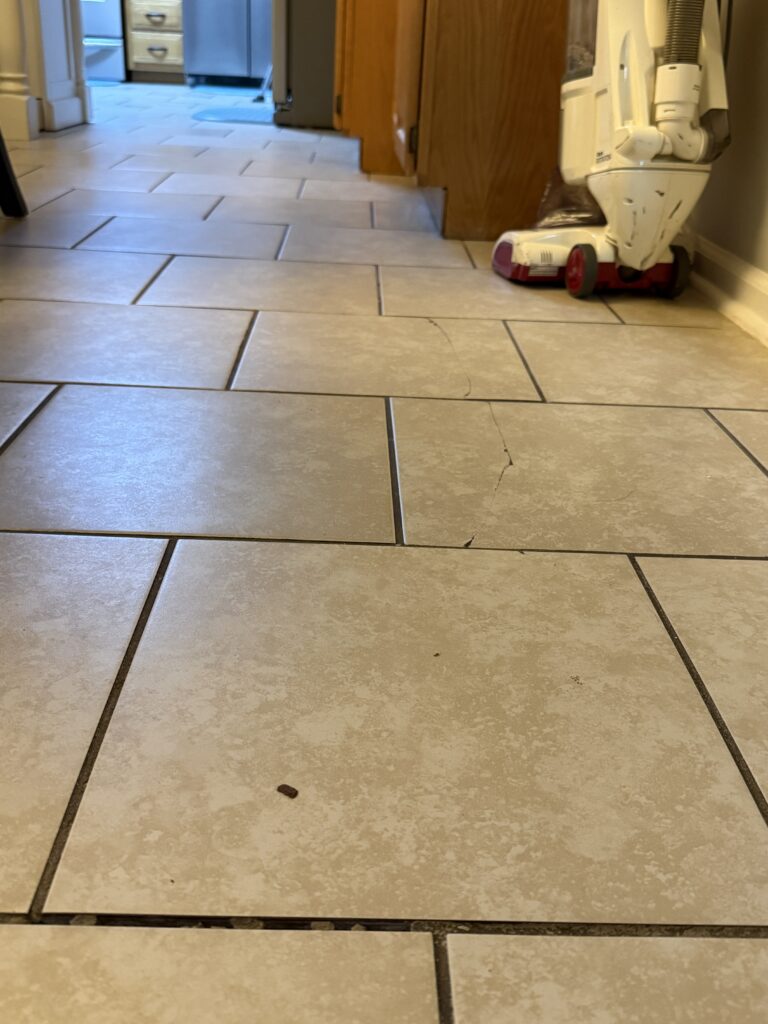
Long crack running in consistent line through kitchen floor tiles.
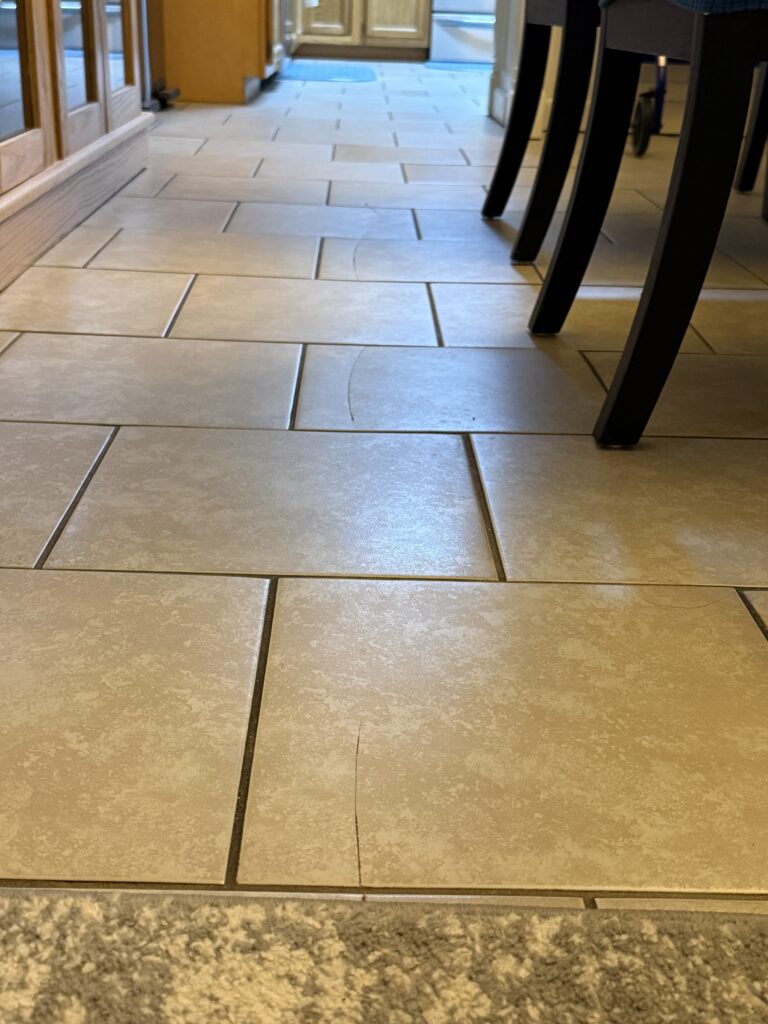
Long crack running in consistent line through kitchen floor tiles.
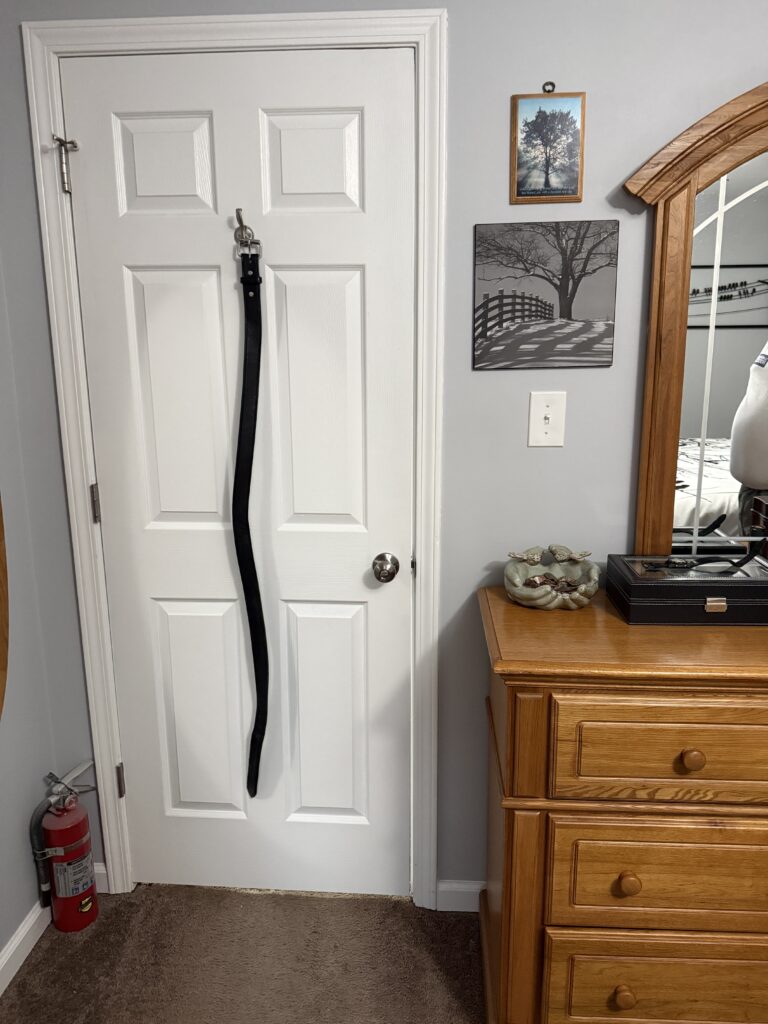
Gap at base of door frame (right bottom) demonstrates frame change.
Diane also showed me separation at the wall-to-ceiling connection in the center hallway, along with door frames that had shifted out of square in the primary bedroom and bathroom. Experiencing all of these changes, the couple felt hoodwinked by the previous owners. They wondered if the tile installation had been an attempt to conceal structural indicators that may have been visible before they purchased the home.
Whether that was the case or not, I have no idea. The great thing about this house, however, was that it had an unfinished basement underneath. So the next step in our investigation was to head downstairs.
Jack is a pretty handy guy, and by the time he and his wife called me, he was beyond frustrated that he couldn’t identify an explanation for what was happening on the first floor. As we walked downstairs, he explained that he had checked the subfloor and floor joists beneath the affected areas but hadn’t found anything concerning. Lucky for me, the problem was fairly obvious as soon as I laid eyes on the primary support system running through the center of the basement.
The outer portions of a wood floor structure rest on the foundation walls, but the center portion relies on a horizontal girder supported by vertical piers/columns. This system carries the weight of the bearing walls above, which in turn support the roof framing. Without an adequately installed girder and pier/column system, a house can experience significant structural movement.
What I saw in the basement were adjustable steel columns that had not been properly installed to support the primary girder. How could I tell at a glance? For one, several columns were visibly out of plumb. For another, they were not centered beneath the girder. Adjustable columns can be acceptable if the threaded adjustment section is not extended more than about three inches. Beyond that, you’re often exceeding manufacturer limitations and increasing the risk of structural problems — which appeared to be the case here. Some threaded sections were extended nearly five inches, and one column was visibly bending at the connection to the fixed portion of the post.
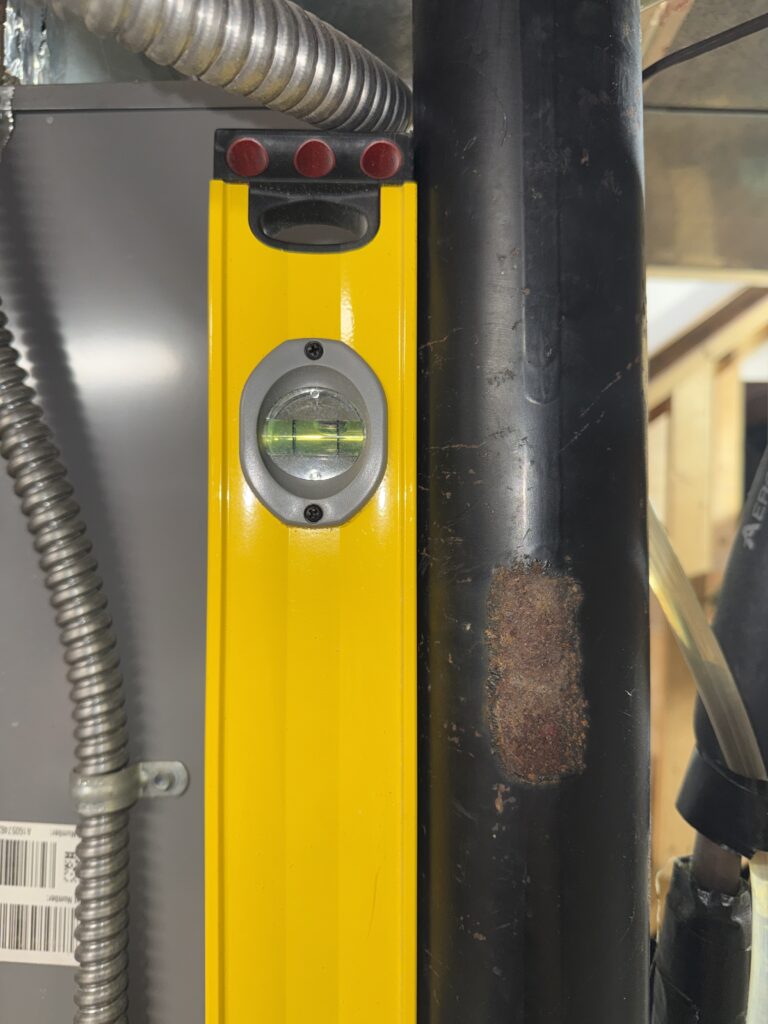
Every single column looked like this – visually out of plumb and verified using a 6′ level.
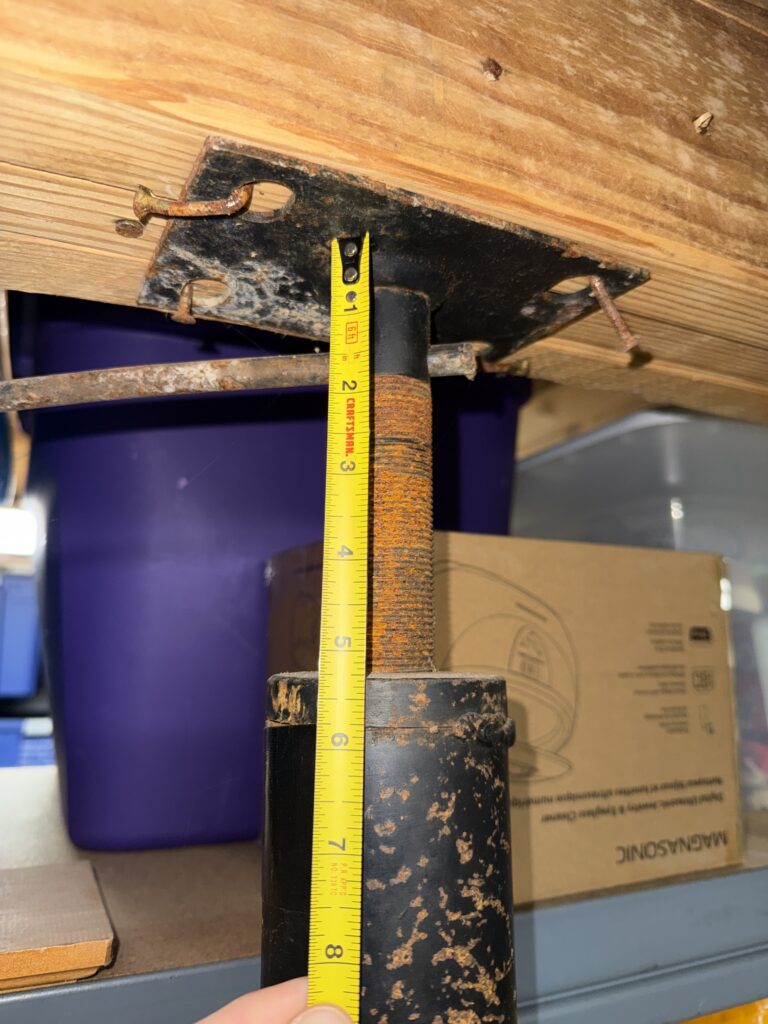
Threaded, extendable portions of columns was overextended (>3″), and some were visibly v-shaped at connection to solid base.
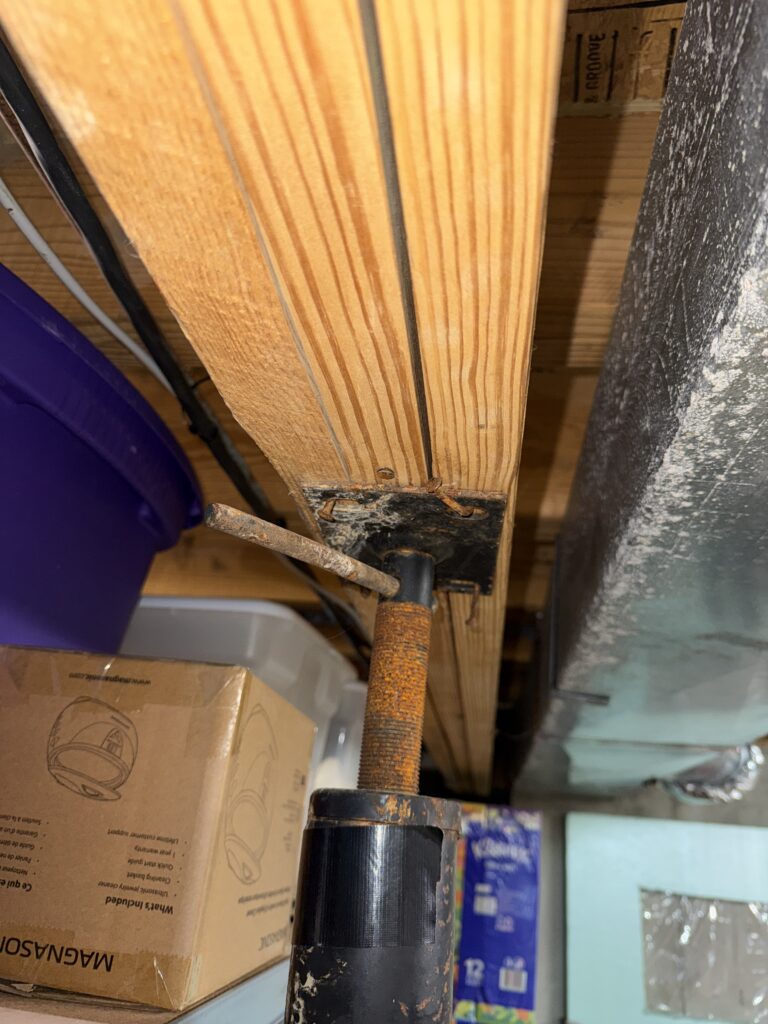
Several of the columns were installed with top plate not spanning equally below 3 layered girder.
Now, keep in mind that as a licensed Kentucky home inspector, I am not qualified to determine the exact structural design requirements for a floor system — that’s the role of a structural engineer. I’m also not a code enforcement authority. However, home inspectors rely on general installation principles and performance observations to determine when a system is not functioning as intended. When that happens, we recommend further evaluation by the appropriate specialist.
Based on the improper installation conditions I observed, I had enough information to recommend evaluation by a structural professional, such as an engineer or qualified contractor, to develop a repair plan. Most likely, this would involve properly installing new piers or columns to adequately support the girder. With proper correction, the structure could be re-leveled and stabilized to prevent future movement affecting the floors, walls, and door frames above.
But wait — even if column issues explained the cracked tile, wall/ceiling separation, and door displacement caused by settlement, it didn’t explain the sloped dining table. The settlement pattern from the columns was front to back, yet the table sloped left to right. So what was going on there?
Here’s what you need to know about the table: it was unique with a glass top and carved base of a dolphin emerging from a wave. Diane explained how special it was to her and how it was one of her most prized pieces of furniture. After confirming the severity of the slope, I knelt beside the table base while Jack handed me his eight-foot level. I also used my nine-inch level — the one I typically carry for checking drain lines.
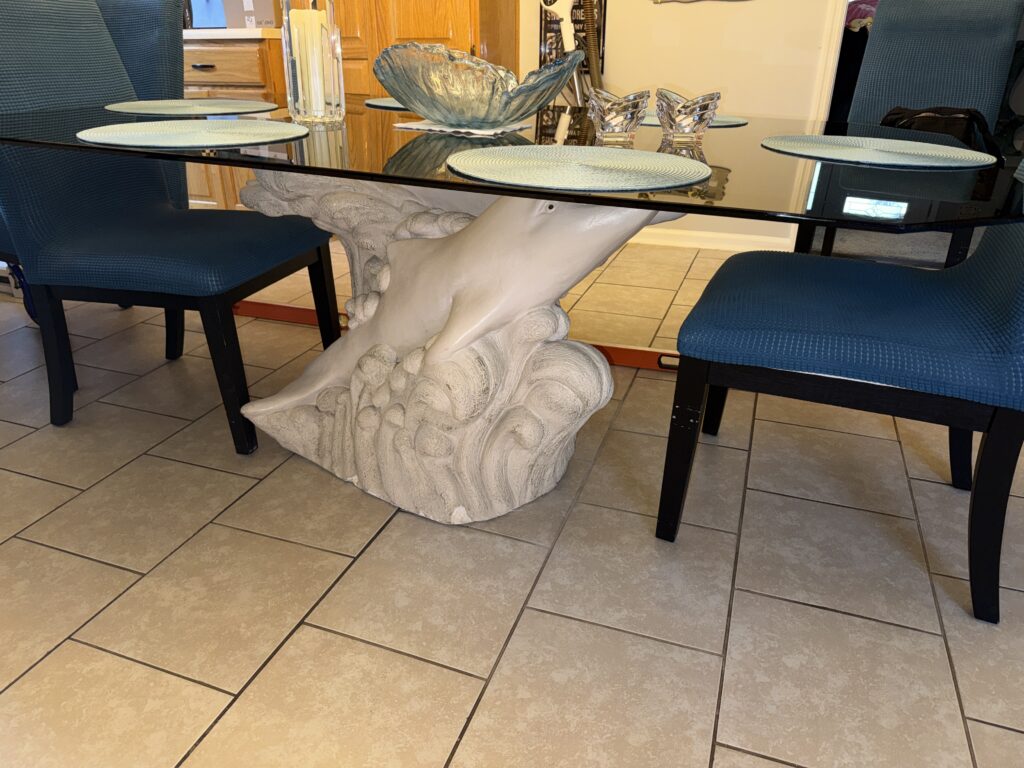
The eight-foot level showed the floor was nearly perfectly level from left to right. However, a section of tile immediately to the left of the table base dipped noticeably and my smaller level confirmed a severe localized slope. The issue wasn’t widespread — it was concentrated.
Looking more closely at the table, the trunk-style base appeared to be…concrete. “Wow,” I said “this looks really heavy.”
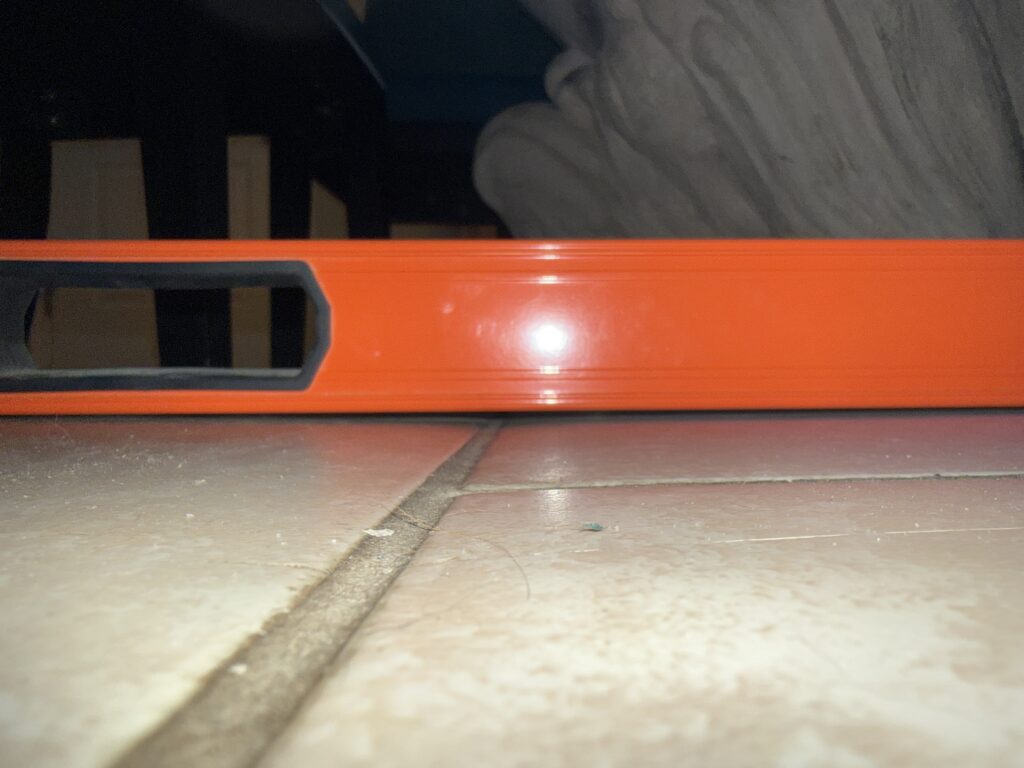
8′ level showed that the kitchen floor was consistent left to right, but a dip was present to left of table.
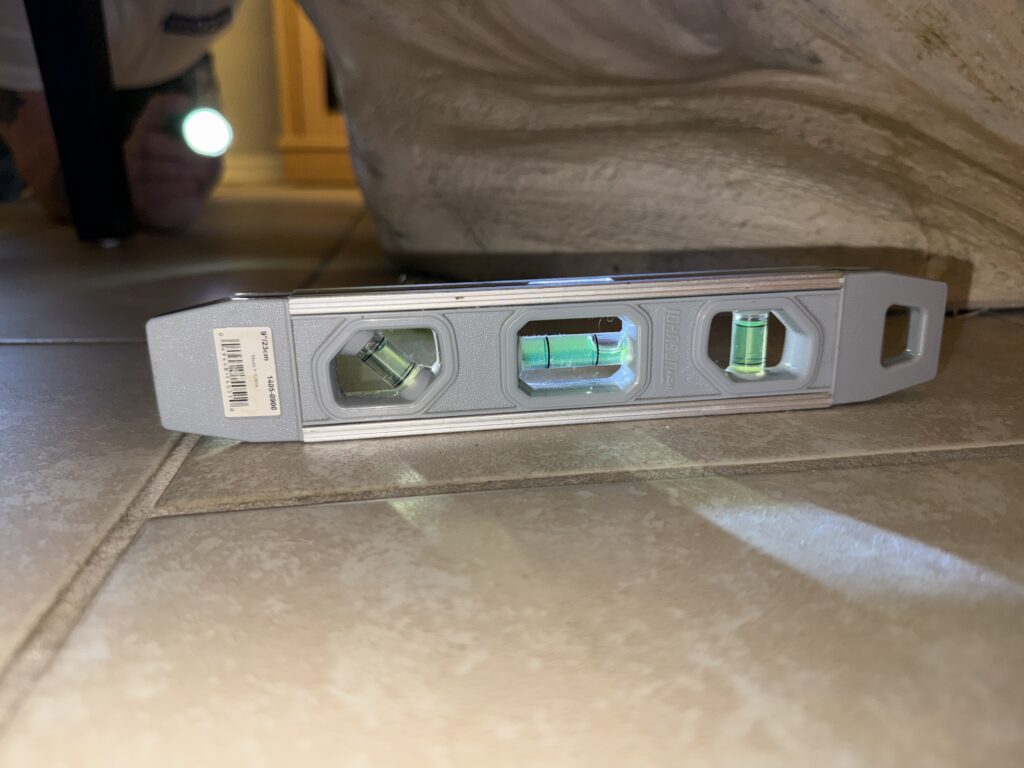
9″ level emphasized the dip in floor beside table base.
“Yes, it was a bear to get in here,” Jack replied. “It weighs a ton.”
The base of the concrete trunk was beginning to chip and deteriorate, likely due to the concentrated weight and the shape of its footprint.
Then I remembered something Jack and Diane had mentioned earlier: when the tile was installed, it had been placed directly over the old vinyl flooring. That meant there was some cushioning beneath the tile — some potential for compression. And that’s when it clicked. The house wasn’t the issue in this spot — the table was.
If you’ve ever placed a large aquarium or heavy safe in your home, you understand this concept. Floor joists and subflooring are designed for typical residential loads — people, furnishings, and standard household contents. When an extremely heavy object is placed over a small footprint, the load can exceed what that localized area was designed to handle without reinforcement.
When I told Diane I believed the table’s weight had caused localized compression and settlement of the flooring beneath it, she began to tear up. I immediately realized I hadn’t framed the explanation carefully enough. Over the previous hour, she had shared pieces of her life with me — stories of loss, family, identity. The thought of losing one more meaningful thing — her beloved table — was overwhelming.
Looking into her glassy eyes, I quickly clarified: reinforcing that section of the floor was the solution — not removing the table.
“Are you sure?” she asked softly.
“Yes,” I assured her. “Your table isn’t going anywhere. It just needs a little structural support underneath.”
As I packed up my tools and pulled away from the house, I felt re-energized. Moments like that remind me why I study building science. People sometimes see home inspectors as just another cog in the real estate transaction, but there’s so much more to it. We solve mysteries. We connect dots. We provide clarity when people feel uncertain.
And at the risk of sounding melodramatic, sometimes — if you’re lucky — you get to go home to your husband and pup feeling genuinely grateful: grateful for the opportunity to help someone keep something that means more to them than you could have known at first glance.